
Metaphysical Properties
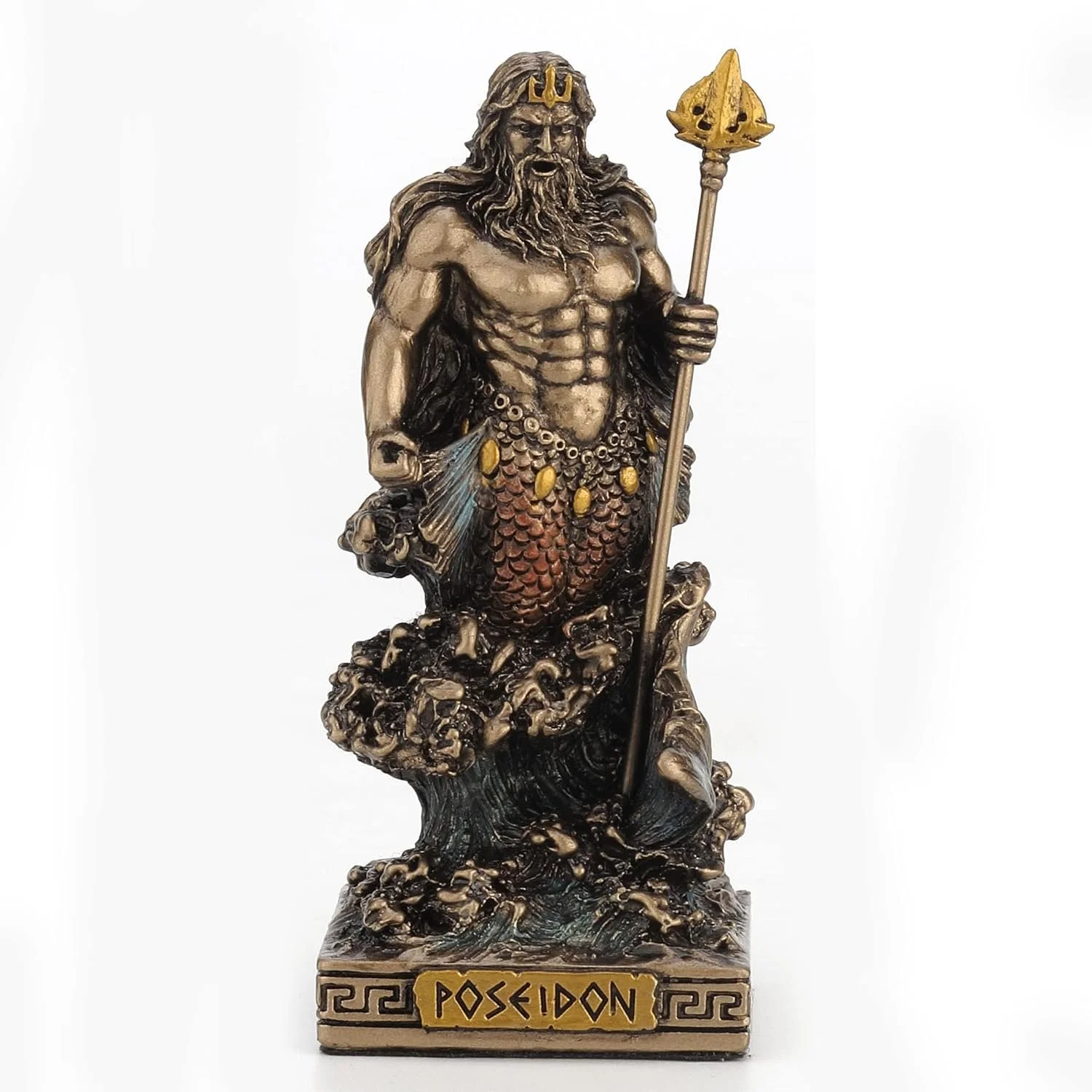
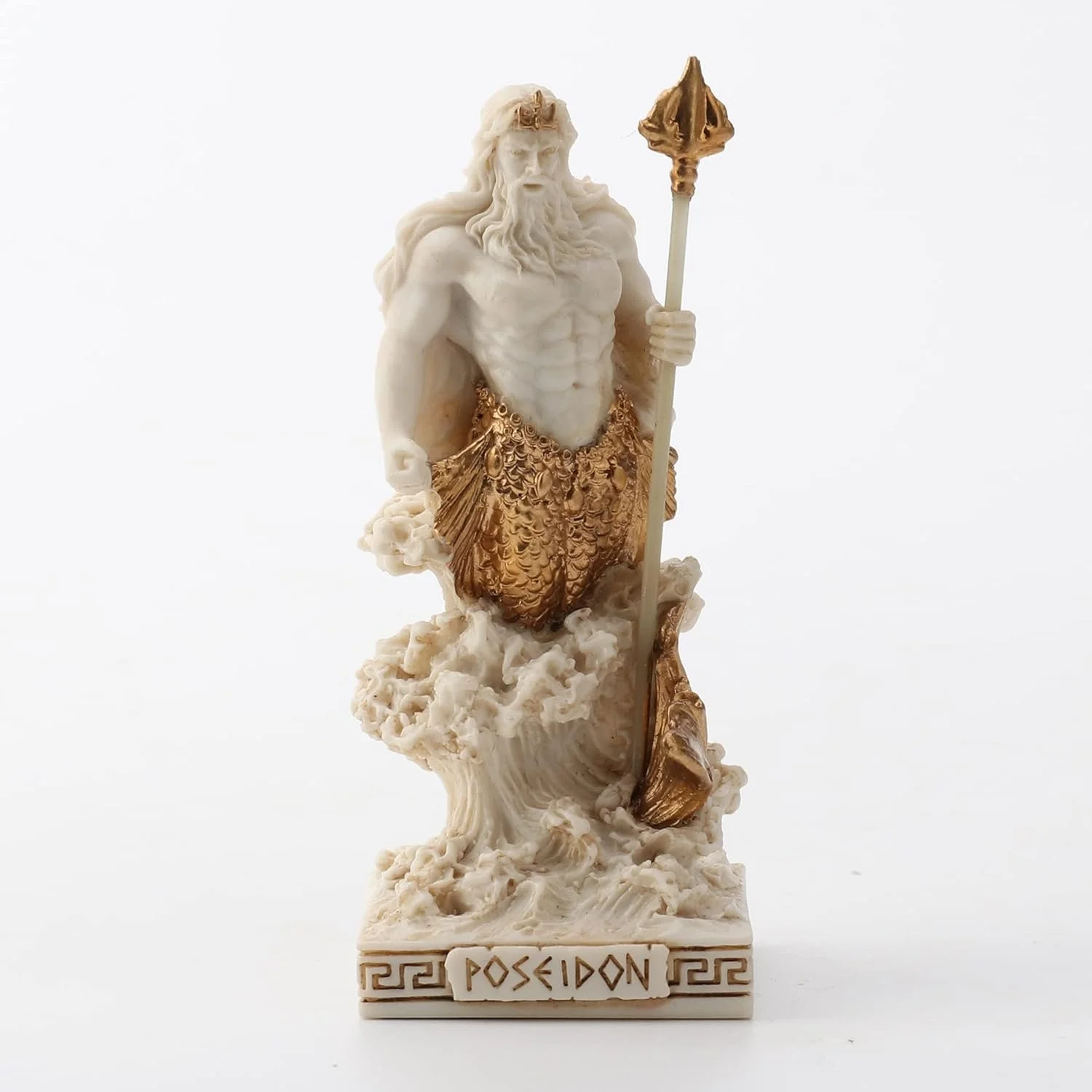
In ancient Greek mythology, Poseidon was the god of the sea, earthquakes, and horses. His name translates to "lord of the earth" or "husband of the earth".
Meaning:
Lord of the earth: Poseidon's name may come from the words posis, meaning "lord" or "husband", and da-, meaning "earth" or "land".
Earth shaker: Poseidon was also known as the "deep sounding Earth Shaker".
Symbolism:
Trident: Poseidon's main symbol was the trident, a three-pronged spear that he used to split boulders and create earthquakes.
Dolphin: Poseidon's other main symbol was the dolphin.
Role:
Sea protector
Poseidon protected seafarers and was the guardian of many Hellenic cities and colonies.
Fertility god
Poseidon was also worshiped as a fertility god because he was the god of fresh waters.
Horse god
Poseidon was also known as Hippios, the god of horses, and was the father of Pegasus.
Roman equivalent: Poseidon's Roman equivalent is Neptune.
Other traits:
Poseidon was often depicted as violent and ill-tempered.
He was known for being vengeful, as in his grudge against Odysseus in The Odyssey.